Postbank Mastercard works best as a practical travel-and-everyday card when fees feel predictable. Global acceptance matters, but the real decision usually comes down to foreign currency costs, ATM charges, and insurance that actually applies to the trip style.
Postbank in Germany ties its Mastercard pricing closely to Giro account packages, so account choice can change the yearly cost and some overseas withdrawal fees.
Global Acceptance and Mobile Wallet Basics
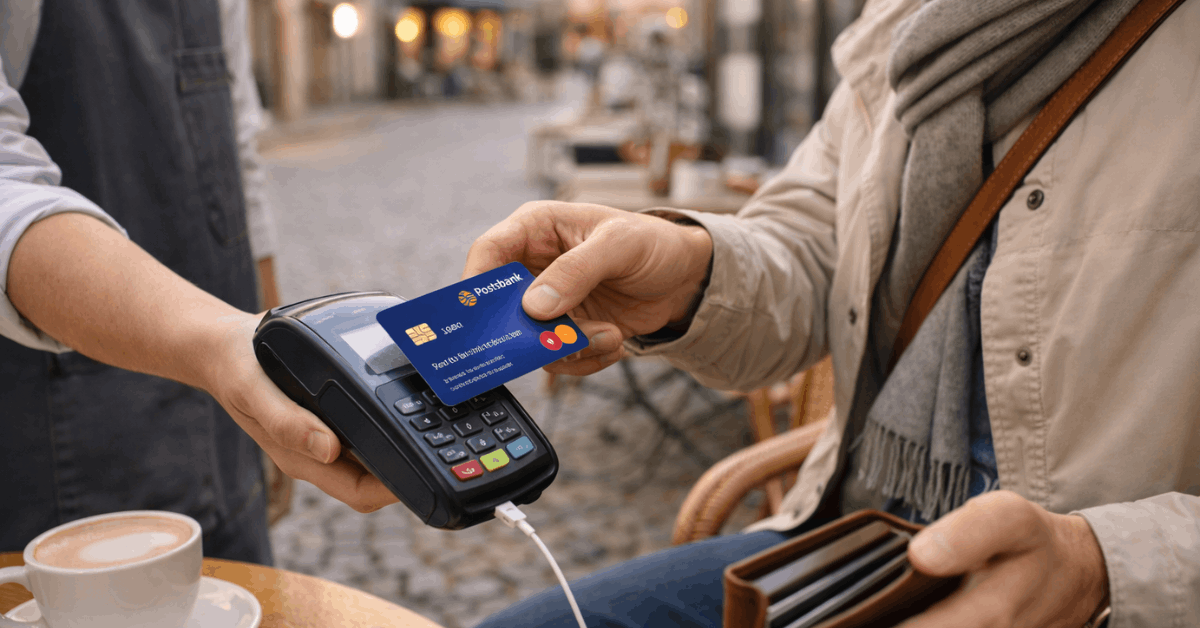
Postbank positions its German Mastercard as a companion to Postbank current accounts, built for everyday spending and travel acceptance. Mastercard acceptance is broad at merchants and ATMs, and contactless payments are standard for quick checkout.
Apple Pay and Google Pay support are highlighted as baseline features for modern use, which helps keep the physical card in the wallet more often.
Purchases in euros inside the EU and the wider EEA are listed as free, which keeps routine spending simple when travel stays inside the euro area. Outside that comfort zone, fees start to shape the value, especially for travelers who pay in local currency frequently.
The product page also lists a daily cash withdrawal limit of €1,000, which functions as a safety control as much as a convenience feature. Planning around that limit helps when trips involve cash-heavy stops such as taxis, small markets, or tips.
Postbank Mastercard Fees and Account Bundles
A clear view of pricing starts with the account package linked to the card. Postbank publishes that the card costs €29 per year for the main card and €15 per year for an additional card, then flags the scenarios where that fee is reduced or waived through specific Giro bundles.
Giro plus includes the Postbank Mastercard free for the first year, then the regular yearly charge applies after the first twelve months. Giro extra plus lists the Postbank Mastercard without an annual fee, and that difference alone can outweigh small usage perks for many households.
Account pricing itself can add conditions, such as a minimum monthly incoming transfer for certain fee waivers on the Giro extra plus. Checking current account terms first keeps the math honest, since a “free card” can still sit inside a paid account package.
Foreign Spending and Currency Conversion Costs
Travel spending gets expensive fast when foreign currency charges repeat across many small purchases. Postbank lists a 1.85% foreign currency fee for consumer Mastercards when transactions settle in a non-euro currency.
EU and EEA euro purchases are shown as free, which suits travelers whose trips stay inside the euro area. That detail makes a meaningful difference for frequent cross-border trips within Europe, because it removes a common friction point.
Local merchant behavior can still influence the final cost. Dynamic currency conversion can appear at terminals, offering to bill in euros instead of local currency. Declining that option usually keeps conversion closer to the card network’s rate, while accepting it often adds an extra markup set by the merchant or terminal provider.
Cash Withdrawals, ATMs, and The Real Cost Of Convenience
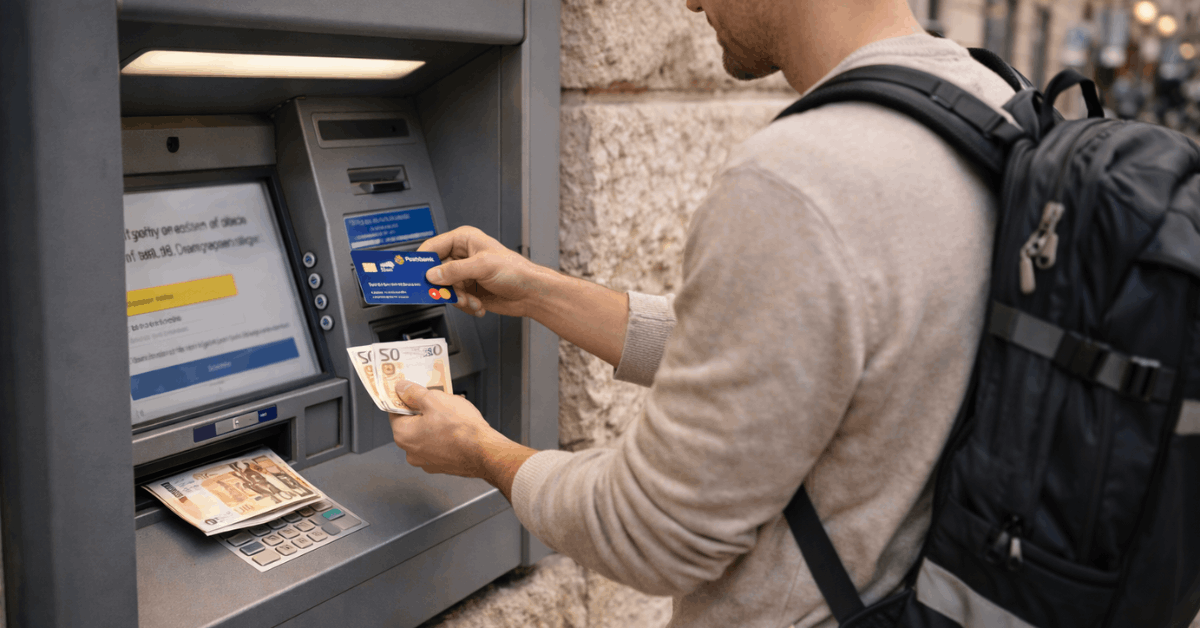
ATM access is part of the card’s travel pitch, but fees deserve attention. Postbank’s German Mastercard page lists 2.5% for ATM withdrawals with a minimum of €5, and 3% at the counter with the same minimum.
Extra charges can also come from the ATM operator, depending on the machine and country. Those surcharges sit outside Postbank’s control and can appear on-screen right before cash is dispensed. Budgeting for that possibility avoids the “double fee” surprise.
Giro extra plus includes a notable travel-friendly exception: the ATM fee for foreign withdrawals is listed as not being charged for Giro extra plus holders when withdrawing abroad. That can change the overall value for travelers who rely on cash, even when foreign currency spending fees still apply to card purchases.
Travel Insurance and Premium Tiers
Travel insurance is where product naming can get confusing, because Postbank offerings differ by country.
Postbank in Germany markets premium cards such as Mastercard Gold and Mastercard Platinum with insurance benefits, while “Postbank Mastercard UNIVERSE” refers to a different Postbank brand in Bulgaria with its own perks and lounge programs. Treating those as separate products prevents a wrong assumption at checkout.
A simple comparison helps keep benefits aligned to needs.
| Card Variant | Where It’s Marketed | Insurance And Travel Perks | Best Fit |
| Postbank Mastercard (Standard) | Germany | Everyday card use, wallet support, global acceptance | Euro-area spenders and basic travel |
| Postbank Mastercard Gold | Germany | Travel health cover and trip cancellation, plus purchase protection terms | Travelers wanting bundled insurance value |
| Postbank Mastercard Platinum | Germany | Premium positioning plus Priority Pass membership model | Frequent travelers wanting a lounge-access path |
| Postbank Mastercard UNIVERSE | Bulgaria | Travel assistance insurance up to EUR 200,000 and LoungeKey-based lounge access claims | Bulgaria-based premium users needing those perks |
Gold in Germany highlights travel medical and trip cancellation coverage, and Postbank also references shopping protection tied to purchases made with the card. Insurance terms and eligibility depend on the policy wording, and travel often needs to be paid with the card for coverage to apply.
Platinum in Germany is marketed as a VIP-leaning card with Priority Pass membership. Priority Pass access still depends on the membership type and per-visit charges, so cost expectations should be set upfront.
UNIVERSE, tied to Postbank Bulgaria, is promoted as a metal premium card with travel assistance insurance up to EUR 200,000, and lounge access claims that reference LoungeKey and specific lounge names at Sofia and Vienna airports. Those details come from Bulgarian Postbank communications, not Postbank Germany.
How To Apply Online In Germany Without Delays
A smoother application usually comes from treating the process like a bank onboarding flow, not a quick checkout form.
Postbank commonly positions the Mastercard as an add-on to a Giro account, so the application path often includes opening Giro Plus or Giro Extra Plus first, then selecting the card option that matches the package.
Digital Identity Verification is a Central Step
Postbank references digital or video identification processes that work on a computer, tablet, or smartphone, using a valid ID card or passport. Accuracy matters more than speed here, since mismatched addresses or inconsistent personal data can slow review during standard credit checks.
Approval and Delivery
Approval and delivery timelines can be quick when everything matches official records. Postbank’s guidance typically mentions delivery in a few days, with a separate PIN mailed later, which is a standard security practice across many German banks.
Support, Contact Channels, and Corporate Address Notes
Support is easiest when official channels are used from the start. Postbank publishes service options through online banking, secure contact routes, and phone support for card blocking and payment issues.
Data safety improves when support starts through the bank’s authenticated tools rather than third-party sites or unofficial numbers.
Corporate location details for Postbank in Germany are published through the bank’s official imprint and contact references, which point to Bonn addresses such as Friedrich-Ebert-Allee and Bundeskanzlerplatz. Keeping those details on file can help with formal correspondence or account documentation needs.
Conclusion
Postbank Mastercard can feel straightforward once pricing is traced back to the Giro account bundle and the fee schedule is understood. Euro-area travelers often benefit most from free euro purchases inside the EEA, while frequent non-euro spenders should plan around the 1.85% foreign currency fee.
ATM use stays convenient, but the 2.5% minimum charge makes fewer, larger withdrawals more cost-efficient for many trips. Insurance value rises with Gold and Platinum tiers, while “UNIVERSE” benefits belong to Postbank Bulgaria and should not be mixed with German card terms.
Disclaimer
Credit involves risk, and card terms can change. Postbank’s current product pages and fee information remain the safest reference point before applying or traveling.